
LP gas leak detection Kaufman County service is the single most reliable way for homeowners, farm owners, and business operators to catch a dangerous propane leak before it turns into a fire, an explosion, or a shockingly high utility bill. In other words, LP gas leak detection Kaufman County work is the structured process licensed plumbers use to locate, confirm, and safely repair propane leaks in homes, barns, and commercial buildings across Terrell and the surrounding townships. Because propane fuels a large share of water heaters, furnaces, stoves, and even grain dryers in the rural stretches of the county, knowing the warning signs — and knowing exactly who to call — genuinely matters. Harris Plumbing TX has served this region since 1990, and the team brings decades of hands-on experience to every propane safety inspection it performs.
Quick Answer: LP gas leak detection Kaufman County involves a licensed plumber checking gas lines, tank connections, and appliances for propane leaks using pressure tests, electronic sniffers, and soap-bubble tests. If you smell rotten eggs or hear hissing near a gas line, leave the area immediately and call a certified plumber, such as Harris Plumbing TX, at (972) 524-8492.
LP Gas Leak Detection Kaufman County: What Rural Property Owners Need to Know
Kaufman County spans roughly 780 square miles, according to U.S. Census data referenced on Wikipedia, and many of those square miles sit well outside the reach of city natural gas lines. As a result, LP gas tanks power a substantial share of rural homes, barns, and outbuildings throughout Terrell and the surrounding townships. Consequently, LP gas leak detection Kaufman County work looks noticeably different than a similar inspection in a dense city neighborhood; technicians must account for underground lines running to detached tanks, older fittings on farm properties, and seasonal usage patterns tied to heating season.
Because of this rural reality, hiring a certified crew matters even more than it would in a city setting. Harris Plumbing TX states it holds active plumbing contractor licenses and is certified for both natural gas and LP gas work, which means the same team that fixes a leaking pipe can also safely test a propane system from the tank all the way to the appliance. In fact, if your property is weighing a new propane line instead of a repair, the page on who handles LP gas line installation near Kaufman County walks through that process in detail. For a broader look at everyday plumbing repairs the company handles alongside gas work, visit the residential plumbing services page.
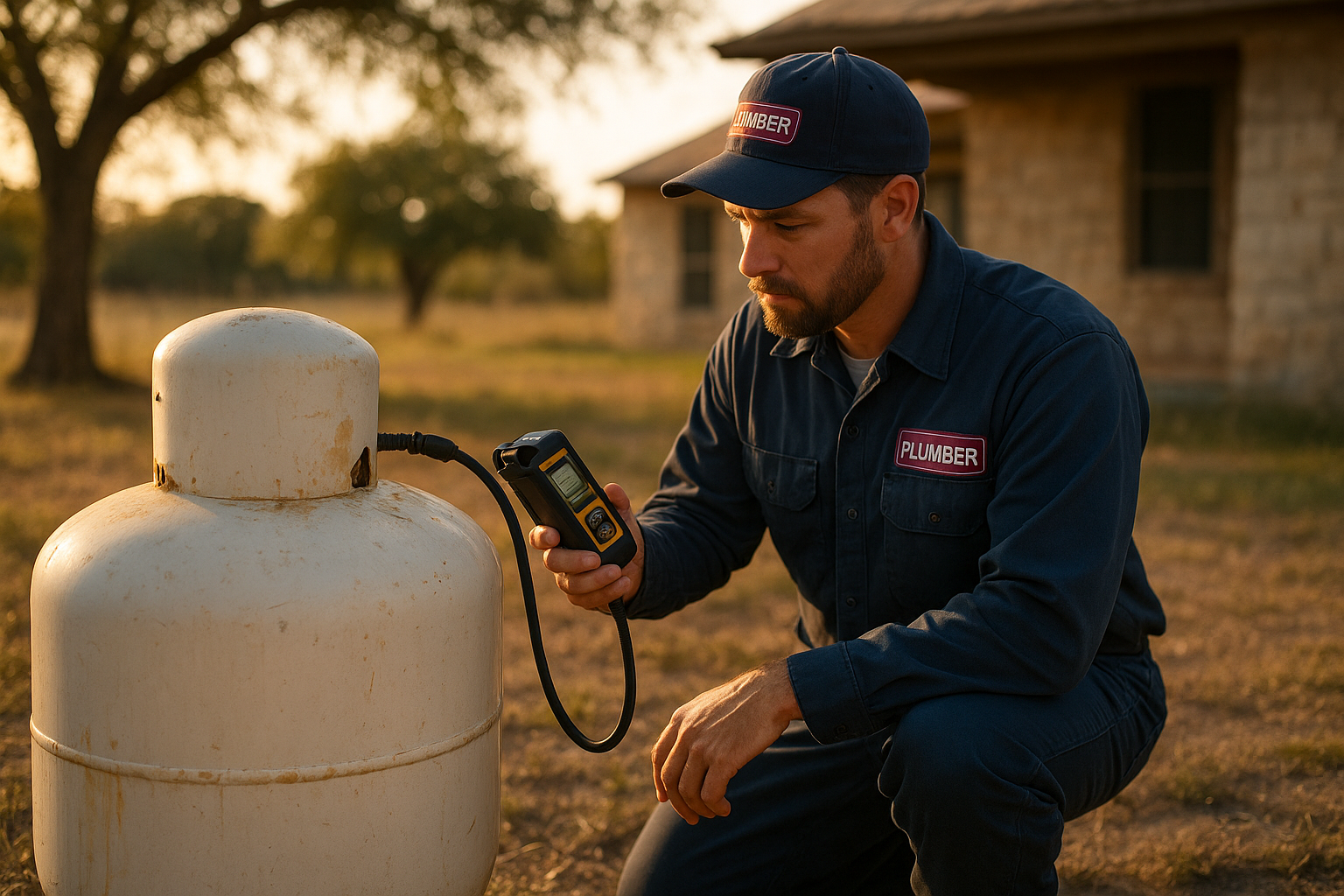
A certified technician checks fittings during LP gas leak detection Kaufman County property owners request most often for rural propane tanks.
What Exactly Is an LP Gas Leak?
An LP gas leak is any point where propane escapes from its intended piping, tank, or appliance connection instead of flowing safely to a burner or pilot light. Propane itself is naturally odorless, which sounds alarming until you learn what suppliers do about it. Therefore, suppliers add a chemical called ethyl mercaptan — essentially a sulfur-based compound — so that even a small leak, as low as one-fifth of the lower explosive limit, produces a detectable rotten-egg smell, according to the Propane Education & Research Council.
In addition, the National Fire Protection Association notes that fuel gas piping systems should be pressure tested before being placed into service, a standard reflected in codes such as NFPA 54. For that reason, a proper inspection never relies on smell alone; instead, it pairs human senses with mechanical testing — things like gauges and electronic sensors — to confirm the exact leak location rather than just its general presence.
Similarly, the Occupational Safety and Health Administration treats propane as a flammable compressed gas requiring specific storage and handling precautions, which is one more reason commercial kitchens and warehouses in Kaufman County should never treat leak checks as optional.
Warning Signs of a Propane or LP Gas Leak You Should Never Ignore
Several signs, either alone or together, suggest a leak is present. Specifically, watch for:
- A persistent rotten-egg or sulfur smell near the tank, meter, or appliances
- A hissing or whistling sound near fittings, valves, or connections
- Dead or discolored grass in a straight line above an underground gas line
- Unusually high propane bills without a change in usage habits
- A pilot light that will not stay lit or burns with a yellow, flickering flame
- Condensation, frost, or bubbling dirt around an outdoor tank fitting even in warm weather
- A faint fog or mist visible near a connection point on a cool morning
If any of these appear, it is best to shut off appliances if it is safe to do so, avoid open flames or light switches, and step outside immediately. Afterward, contact a certified plumber for a full inspection rather than guessing at the source — guesswork is exactly how small leaks turn into expensive emergencies.
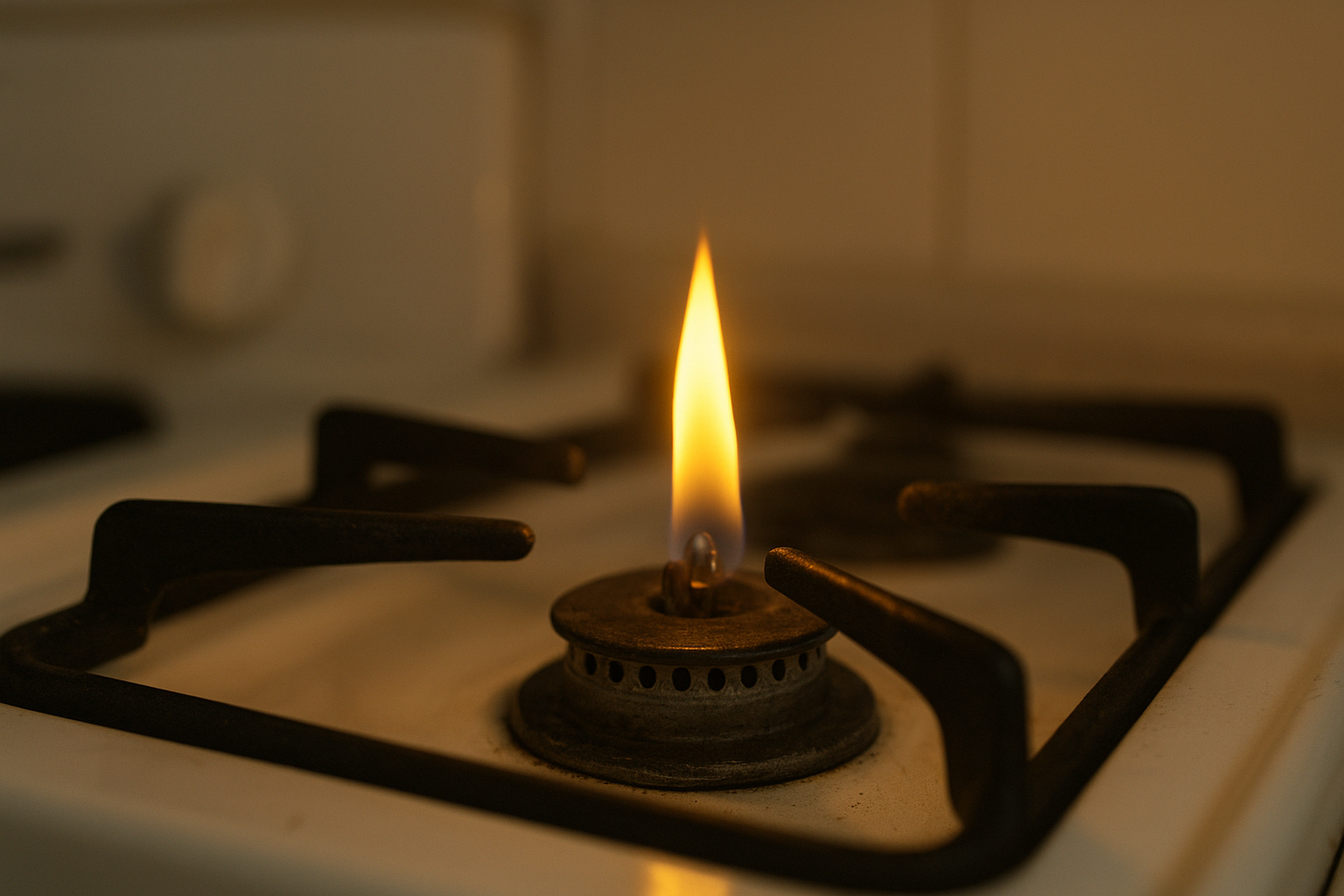
A yellow, unstable pilot flame is one warning sign that prompts a call for professional gas leak detection.
How Professional LP Gas Leak Detection Works, Step by Step
Licensed plumbers follow a consistent sequence when responding to a suspected leak. As a result, the process is thorough and repeatable across both residential and commercial jobs.
- Schedule a professional inspection: call a licensed plumber as soon as a gas odor, hissing sound, or unusually high propane usage appears so a technician can evaluate the entire system from the tank to the appliance.
- Shut off the gas supply if needed: when the smell is strong, the technician or property owner closes the main valve at the tank before further testing begins, which reduces the risk of ignition.
- Perform a pressure test on the gas lines: the plumber pressurizes the piping system and monitors for pressure drops over time, which reveals whether a leak exists anywhere along the line.
- Check fittings and appliance connections: using an electronic gas detector or a soap-bubble solution, the technician examines every joint, valve, and hookup for escaping gas, one connection at a time.
- Repair or replace damaged components: once the leak location is confirmed, the plumber repairs or replaces the faulty fitting, pipe, or connector and retests the entire system before restoring service.
Because many propane-fed appliances also involve traditional plumbing, such as gas water heaters, the same visit often covers related repairs too. For details on that overlap, see the water heater installation and repair page. Likewise, if certification itself is a concern for your property, the breakdown of what makes a licensed natural gas plumber in Kaufman County qualified explains the credentials worth asking about before you hire anyone.
LP Gas vs. Natural Gas: Key Differences in Leak Detection
Although both fuels are treated with an odorant, LP gas and natural gas behave very differently once they escape a line. LP gas, or propane, is heavier than air, so it tends to pool near the ground, in crawl spaces, or inside low areas like basements. In contrast, natural gas is lighter than air and rises toward ceilings and upper rooms. Consequently, a technician searching for an LP gas leak will pay close attention to floor-level spaces, tank fittings, and outdoor supply lines, while a natural gas inspection focuses more on overhead piping and meter connections.
This distinction is exactly why certification for both fuel types matters so much. A plumber trained only in one system may overlook where the other tends to collect, which leaves real risk on the table. Harris Plumbing TX notes it is certified for both natural gas and LP gas work, which allows the same crew to serve properties using either fuel source across Terrell and Kaufman County. For property owners planning new construction, the guide on natural gas line installation in Terrell, TX explains what to know before a line goes in the ground.
Propane Appliances Common Across Kaufman County Homes and Farms
Unlike many suburban neighborhoods, Kaufman County properties frequently run propane through a wide range of equipment beyond the kitchen stove. For instance, grain dryers, barn heaters, outdoor generators, pool heaters, and tankless water heaters all commonly connect to a central LP gas supply on rural lots. Each of those connection points is a potential leak site, which is one reason a thorough inspection covers the entire system rather than just the obvious appliances.
Moreover, seasonal appliances that sit unused for months, such as a barn heater during summer, are particularly prone to developing small leaks at the fitting while idle. Therefore, it is wise to have these connections checked before the heating season begins, not after the first cold snap when demand on the system suddenly spikes.
Why Kaufman County Homes and Businesses Need Certified Gas Leak Detection
Commercial kitchens, warehouses, and multi-unit properties often run larger propane systems than a single-family home, which means a leak can affect more people and more equipment at once. Therefore, business owners in Terrell and the surrounding county benefit from scheduling inspections that fit around operating hours rather than forcing a full shutdown. Harris Plumbing TX, led by owner Steve Harris alongside his son and a plumber with 15 years on the team, brings over 46 years of combined plumbing experience to both residential and commercial gas work. For businesses weighing options, the commercial plumbing services page outlines how larger systems are handled.
Homeowners, meanwhile, often discover propane issues during unrelated projects, such as a remodel or a sewer inspection. In those cases, it helps to work with a single company familiar with the whole property. For related underground work, the sewer line repair and replacement page covers another common source of buried-line concerns in the region, and the overview of drain repair in Kaufman County addresses a third type of underground issue property owners frequently ask about in the same visit.
What Drives the Cost of LP Gas Leak Detection in Kaufman County
Pricing for a propane leak inspection is rarely one-size-fits-all. In particular, the following factors typically influence the final cost:
- Property size and the total length of gas piping that needs testing
- Number of appliances and connection points tied into the propane system
- Whether the line runs underground to a detached tank, which adds trenching considerations
- Age and condition of existing fittings, especially on properties built before modern code updates
- Whether repairs, such as a replaced regulator or corroded fitting, are needed after the leak is found
Because every property is different, Harris Plumbing TX offers free estimates over the phone so homeowners and business owners know roughly what to expect before a technician ever arrives on site.
Common Mistakes That Delay Leak Detection
Above all, the biggest mistake is waiting. Homeowners sometimes notice a faint smell, assume it will pass, and put off calling anyone for days. Similarly, some people try to test for a flame with a lighter or match near a suspected leak, which is extremely dangerous given how easily propane ignites. Others rely only on smell and skip a mechanical pressure test entirely, missing slow leaks that have not yet produced a strong odor. In particular, older properties with original 1990s-era fittings are more prone to small leaks that a full inspection — not a quick sniff test — will actually catch. A complete overview of available services, including diagnostic visits, is available on the main services page.
Propane Safety Tips Between Professional Inspections
Between scheduled visits, a few simple habits reduce risk considerably:
- Keep the area around your propane tank clear of brush, leaves, and debris
- Install a battery-powered propane gas detector in low-lying rooms near appliances
- Never paint over or obstruct the pressure relief valve on an outdoor tank
- After a storm or heavy rain, visually check that tank fittings have not shifted
- Replace flexible connector hoses on appliances every 10 to 15 years, or sooner if cracked
That said, none of these habits replace a certified inspection; they simply lower the odds of a slow leak going unnoticed between visits.

A completed inspection checklist gives Kaufman County property owners peace of mind after a leak detection visit.
Frequently Asked Questions About LP Gas Leak Detection Kaufman County
What does LP gas leak detection Kaufman County involve?
LP gas leak detection Kaufman County involves a licensed plumber inspecting propane lines, connections, and appliances for leaks using pressure tests, electronic detectors, and soap-bubble checks. The goal is to find even small leaks before they become safety hazards.
How do I know if I have a propane leak at my Kaufman County property?
A rotten-egg or sulfur smell near your tank, lines, or appliances is the most common sign of a propane leak. You may also hear hissing near fittings or notice dead vegetation above an underground line.
Is Harris Plumbing TX certified for LP gas and natural gas work?
Yes, Harris Plumbing TX states it holds active plumbing contractor licenses and is certified for both natural gas and LP gas work. The company has served Terrell and Kaufman County since 1990.
Do you offer emergency LP gas leak detection in Kaufman County?
Call (972) 524-8492 right away if you suspect a leak, and the team can discuss scheduling an inspection promptly. Regular business hours are Monday through Friday, 8 AM to 5 PM.
How much does LP gas leak detection typically cost?
Costs vary based on property size, gas line length, and whether repairs are needed after the leak is located. Harris Plumbing TX offers free estimates over the phone so property owners know what to expect before scheduling work.
How long does a typical gas leak inspection take?
A standard residential inspection usually takes one to two hours, depending on the number of appliances and the length of the gas piping. Commercial properties with larger systems may take longer.
Can I check for an LP gas leak myself with soap and water?
A soap-and-water solution brushed on fittings can reveal bubbling at an obvious leak point, but it will not catch every leak. Because propane is flammable, it is safer to call a licensed plumber for a full inspection rather than relying on DIY checks alone.
What is the difference between an LP gas leak and a natural gas leak?
LP gas, or propane, is heavier than air and tends to pool near the ground, while natural gas is lighter and rises. This difference changes where leaks concentrate and how a technician searches for them.
What should I do immediately if I smell gas in my home?
Leave the building right away, avoid switches or flames, and call your propane supplier or a licensed plumber from a safe distance. Do not go back inside until a professional confirms it is safe.
What common mistakes do homeowners make with gas leaks?
Common mistakes include ignoring a faint odor, using a lighter or match to check for a flame, and delaying a professional inspection after a suspected leak. These habits increase the risk of fire or explosion.
Do you serve businesses and commercial properties in Kaufman County?
Yes, Harris Plumbing TX works with restaurants, retail buildings, warehouses, and other commercial customers throughout Kaufman County. Commercial gas systems are inspected with the same certified process used for residential properties.
How often should propane systems be inspected for leaks?
Most propane systems benefit from an annual inspection, along with a check any time a tank is refilled after sitting empty for an extended period. Older systems or those near remodeling work should be inspected more frequently.
What causes LP gas leaks in older propane systems?
Corroded fittings, cracked flexible connectors, worn regulator seals, and shifted underground piping after soil movement are the most common causes. Regular inspections catch these issues before they progress to an active leak.
Does homeowners insurance cover damage from a propane leak?
Coverage depends on your specific policy and the cause of the leak, so it is best to check directly with your insurance provider. Keeping documented inspection records from a licensed plumber can help support a claim if damage occurs.
What safety equipment can help detect leaks between professional inspections?
A battery-powered or hardwired propane gas detector placed near floor level in rooms with appliances can provide an early warning. These devices complement, but do not replace, a full professional inspection.
Final Thoughts on LP Gas Leak Detection Kaufman County
In short, LP gas leak detection Kaufman County property owners can trust starts with recognizing the warning signs, acting quickly, and choosing a certified team for the inspection. Because propane is common across rural parts of the county, a proactive checkup can prevent a small fitting issue from becoming a costly emergency. Harris Plumbing TX, family-owned since 1990 and certified for both natural gas and LP gas work, offers free phone estimates and serves homeowners and businesses throughout Terrell, Kaufman County, and the surrounding area. If you notice a gas odor, hear hissing near a line, or simply want a routine safety check, call (972) 524-8492 to schedule an inspection today.