
Natural gas line installation Terrell TX projects demand licensed expertise, correct permitting, and strict compliance with fuel gas safety codes before any flame ever reaches a burner. Whether you need a new line run to a kitchen range, a tankless water heater connection, or an extension out to a detached workshop, the job hinges on precise pipe sizing, careful routing, and a pressure test that proves the system is leak-free. Harris Plumbing TX, a family-owned plumbing company based in Terrell, Texas, has handled gas piping work since 1990. Below, you’ll find the most complete guide available anywhere online for what the process involves, what it costs, which mistakes to avoid, and how to choose a certified plumber for the job.
Quick Answer: Natural gas line installation Terrell TX involves running new or extended gas piping from a meter or LP tank to appliances, sized and installed according to the National Fuel Gas Code. A licensed plumber pressure-tests and has the line inspected before any appliance is connected. In short, homeowners and business owners in Terrell should always hire a certified natural gas or LP gas plumber, such as Harris Plumbing TX, to keep every foot of pipe code-compliant and safe.
What Is Natural Gas Line Installation in Terrell TX?
Natural gas line installation is the process of running brand-new pipe, or extending existing pipe, to deliver fuel to appliances like furnaces, water heaters, ranges, and outdoor grills. Specifically, this involves choosing the correct pipe material and diameter, routing the line through walls or underground, and connecting it to a utility meter or an LP gas tank.
Because gas systems are pressurized and combustible, every step follows strict guidance from the National Fuel Gas Code, known as NFPA 54. As a result, licensed plumbers must calculate total appliance load (the combined fuel demand of every connected device), select approved fittings, and pressure-test the finished line before it ever goes into service. In addition, local jurisdictions typically require a permit and a final inspection before an appliance can legally be connected.
In Texas, pipeline safety is also overseen at the state level. For context, the Railroad Commission of Texas regulates natural gas pipeline safety statewide, which is one more reason certified installation matters for any Terrell property.
Signs Your Terrell Home or Business Needs New Gas Piping
Several warning signs suggest it’s time for gas line installation or repair rather than a quick patch job. For instance, a persistent sulfur-like odor near an appliance or meter often points to a leak that requires immediate attention. Similarly, older galvanized steel pipes that have corroded internally can restrict gas flow, causing weak flames or pilot lights that refuse to stay lit.
Furthermore, homeowners adding a new gas range, tankless water heater, outdoor kitchen, or fireplace usually need a dedicated line extension sized specifically for that appliance. Commercial kitchens and food-service facilities, meanwhile, often require higher-capacity gas piping to run multiple cooking appliances at once without a pressure drop. In any of these situations, a professional evaluation is the safest first step, and it pairs well with related upgrades like water heater installation and repair when both projects overlap.
Above all, never ignore a hissing sound near a connection, dead vegetation in a straight line across a yard, or dirt that appears to be blowing from the ground near a buried line. Each of these is a classic underground gas leak indicator that warrants an immediate professional check.
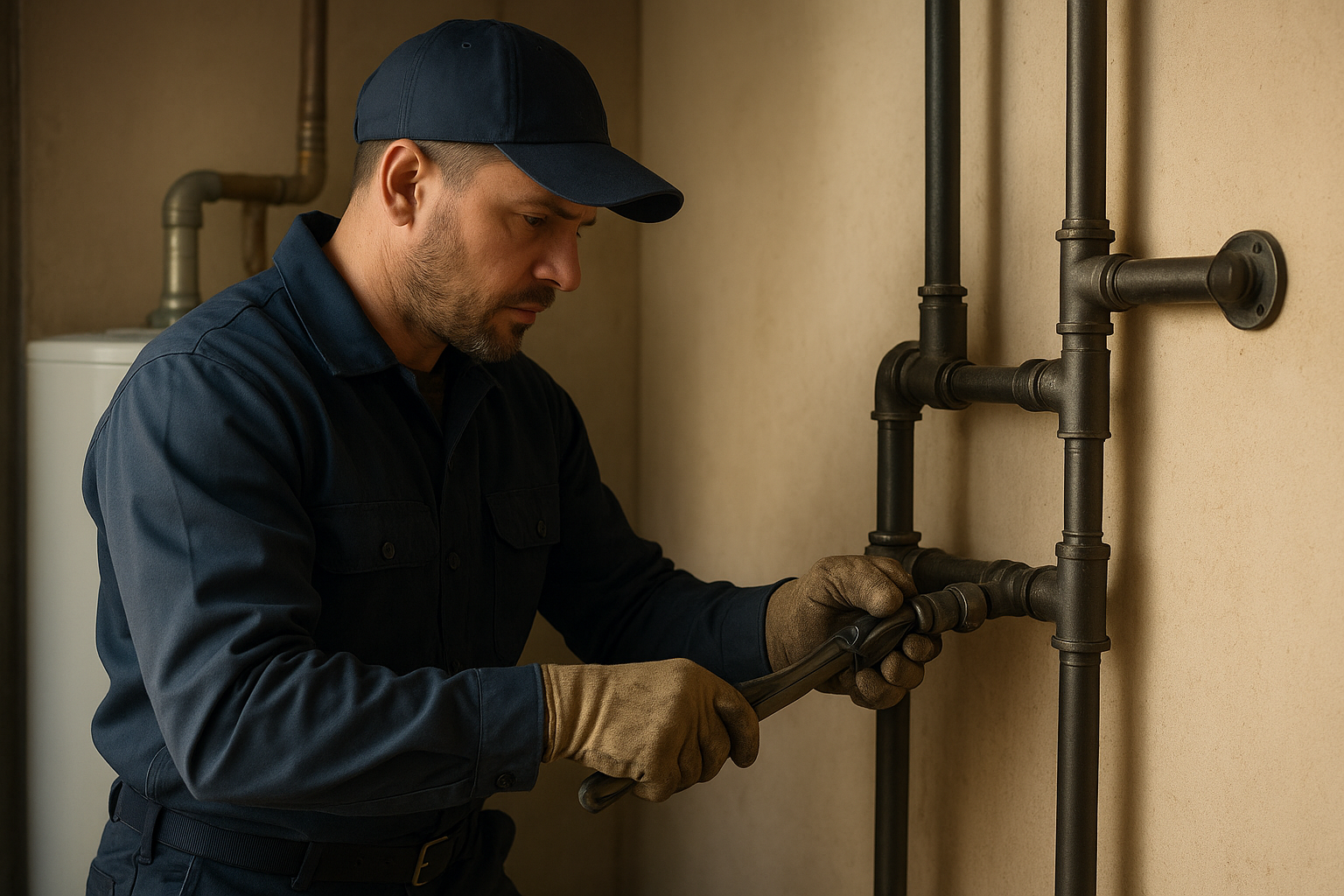
Careful pipe sizing and secure fittings are essential during natural gas line installation Terrell TX projects.
The Natural Gas Line Installation Terrell TX Process, Step by Step
Although every project varies slightly, most installations follow the same general sequence. Understanding these steps in advance helps homeowners and business owners know exactly what to expect from the first phone call to the final inspection.
- Site evaluation and permit review: The plumber inspects the property, calculates total appliance load for every fixture that will draw fuel, and files the required city permit before a single section of pipe is touched.
- Pipe sizing and material selection: Diameter and material are chosen based on gas demand, total running distance, and whether the pipe will sit indoors, outdoors, or buried underground in a trench.
- Trenching or routing: Buried lines require a trench dug to the correct depth under local code, while indoor runs are routed through walls or crawl spaces while keeping proper clearance from other utilities.
- Pipe installation and connections: Pipe sections are threaded or fitted together using approved connectors, and a dedicated shutoff valve is installed at each appliance for safety and easy maintenance access.
- Pressure testing: The finished line is pressurized with air or inert gas and monitored over time to confirm there are no leaks anywhere along the entire run before anything is connected.
- Inspection and appliance connection: A local building inspector reviews the completed work, after which the plumber connects the appliances and verifies proper operation and flame quality.
Consequently, most residential jobs finish within one to two days once permitting is in place, while larger commercial installations may take longer depending on scope and the number of appliances being served.
How Much Does Natural Gas Line Installation Cost in Terrell TX?
Cost is one question competitor sites rarely answer in detail, yet it’s usually the first thing a homeowner wants to know. In general, pricing depends on four factors: total pipe length, material type, trenching difficulty, and the number of appliances being connected. Here is a realistic breakdown of what typically influences the final number:
- Single appliance hookup (e.g., a new gas range or dryer): generally the most affordable option, since it involves a short run from an existing line.
- Full line extension to a detached garage, pool heater, or outdoor kitchen: priced higher due to added trenching and longer pipe runs.
- Whole-home repiping for older properties with corroded galvanized lines: the most involved project, since it usually touches multiple appliance connections at once.
- Commercial multi-appliance systems: priced based on total BTU load across all connected equipment, plus any required code upgrades.
Because every property is different, the most accurate way to get a number is a free phone estimate. For a broader look at current rates across services, the local plumbing offers and pricing guide for Terrell TX is a useful starting point before you schedule a gas line project.
Why Licensing and Certification Matter for Gas Line Work
Gas piping is not a do-it-yourself project. Above all, an improperly sized or poorly sealed line can create a fire hazard, a carbon monoxide risk, or a costly utility shutoff order. Therefore, hiring a plumber who holds an active plumbing contractor license and a specific natural gas or LP gas certification is essential, not optional.
Harris Plumbing TX has held active licensing and certification for natural gas and LP gas work throughout its history serving Terrell and Kaufman County. Owner Steve Harris works alongside his son and a plumber who has been with the company for 15 years, bringing over 46 years of combined plumbing experience to every project. In addition, the team applies the same standards of honest assessment and fair pricing to gas work as it does to residential plumbing repairs and installations.
Carbon Monoxide and Gas Safety: What Every Owner Should Know
A correctly installed gas line also protects against carbon monoxide (CO), a colorless, odorless gas produced when fuel burns incompletely. According to the Centers for Disease Control and Prevention, CO poisoning sends thousands of people to emergency rooms every year, which is exactly why proper venting, combustion air, and professional installation matter so much.
Consequently, every gas appliance connection should include a working CO detector nearby, and any line installation should be paired with a check of existing venting. This is a layer of protection that many basic installation guides skip entirely, yet it’s a critical part of a safe system.
Natural Gas vs. LP Gas Line Installation: What’s the Difference?
Natural gas is delivered continuously through a utility pipeline at relatively low pressure, whereas LP gas, also known as propane, is stored on-site in a tank and delivered at a higher operating pressure. As a result, LP gas systems require a pressure regulator at the tank and often use different pipe sizing than a natural gas connection.
Notably, properties without access to a municipal natural gas line, which is common in some rural parts of Kaufman County, often rely on LP gas instead. In either case, the installation process, testing requirements, and safety standards remain equally rigorous. According to the Wikipedia entry on liquefied petroleum gas, LP gas is widely used in areas lacking piped natural gas infrastructure, which makes certified installation knowledge especially valuable for rural service areas.
If your property sits outside the municipal gas grid, it helps to know exactly who does LP gas line installation near Kaufman County before you schedule anything, since not every plumber carries LP-specific certification.
By the Numbers: According to the U.S. Energy Information Administration, natural gas serves as the primary heating fuel in nearly half of U.S. households, underscoring why safe, code-compliant gas line infrastructure remains essential across Texas communities like Terrell.
Pipe Materials Used in Gas Line Installation
Material choice affects durability, flexibility, and where a line can legally be installed. Here’s a quick comparison of the three materials most commonly used across Terrell projects:
- Black iron pipe: Rigid, durable, and the traditional standard for indoor gas runs; it requires threading at every joint.
- Corrugated stainless steel tubing (CSST): Flexible and faster to install around obstacles, often used in remodels and tight spaces.
- Polyethylene pipe: Used almost exclusively for buried, outdoor runs because it resists corrosion in the soil.
Local code, location, and whether the line sits indoors or underground all factor into which material a licensed plumber will recommend for your specific project.
Common Mistakes to Avoid With Gas Line Projects
Some property owners attempt shortcuts that create long-term problems. For example, using undersized pipe to save on material cost can starve appliances of adequate fuel pressure, leading to poor performance or nuisance shutoffs. Similarly, skipping the permit and inspection step may seem faster, but it can create liability issues during a future home sale or insurance claim.
Likewise, ignoring a faint gas odor rather than calling a professional immediately is one of the most dangerous mistakes a homeowner can make. Instead, the safest approach is to leave the property, contact the gas utility, and then schedule a licensed plumber to diagnose and repair the issue. This same attention to detail applies to related systems, including sewer line repair or replacement, where deferred maintenance often leads to bigger repairs later.
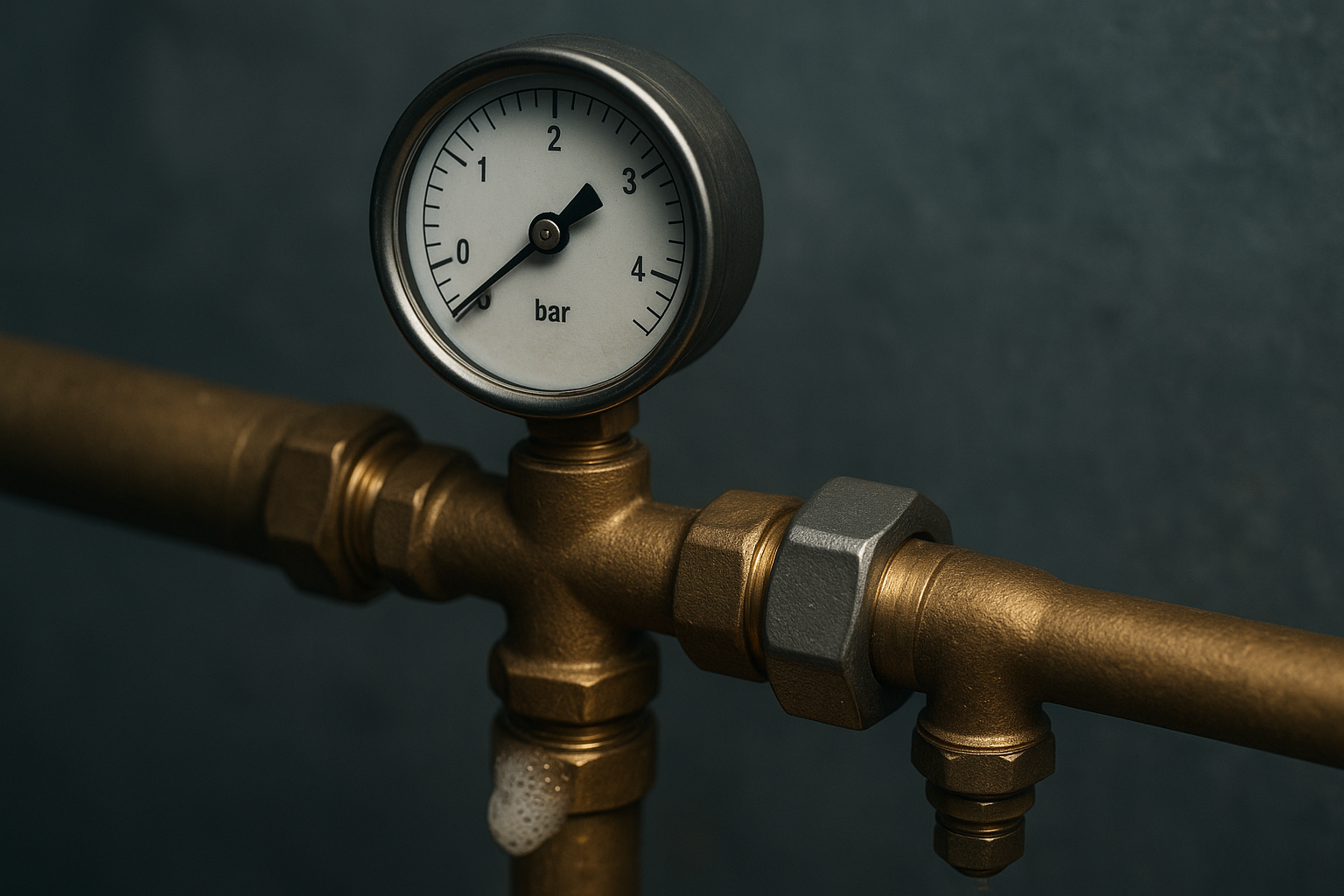
Pressure testing confirms a gas line is leak-free before any appliance is connected. For a deeper walkthrough, see our How Long Does It Take to Replace LP Gas Lines in Residential Homes?.
New Construction and Remodel Gas Piping in Terrell TX
New builds offer the easiest path to perfectly sized gas piping, since the plumber can plan routing before walls and flooring are finished. In contrast, remodels often require rerouting existing lines around new cabinetry, relocated ranges, or expanded outdoor living spaces. Either way, permits and inspections remain mandatory steps that cannot be skipped.
If you’re building new in the area, it’s worth reviewing what to know about new construction plumbing in Terrell TX before finalizing floor plans, since gas appliance placement affects both piping cost and future maintenance access.
Residential and Commercial Gas Piping in Terrell and Kaufman County
Homeowners and businesses have different needs when it comes to gas piping. On one hand, a homeowner might need a single line extended to a new range or an outdoor fire feature. On the other hand, a restaurant or retail building may require a higher-capacity system supporting multiple appliances, often while trying to limit disruption to daily operations.
Harris Plumbing TX serves both markets throughout Terrell, Kaufman County, and surrounding counties, handling everything from small residential extensions to larger commercial plumbing services projects. Because commercial work can often be scheduled around business hours or completed in phases, disruption to customers and staff can typically be minimized with advance planning.
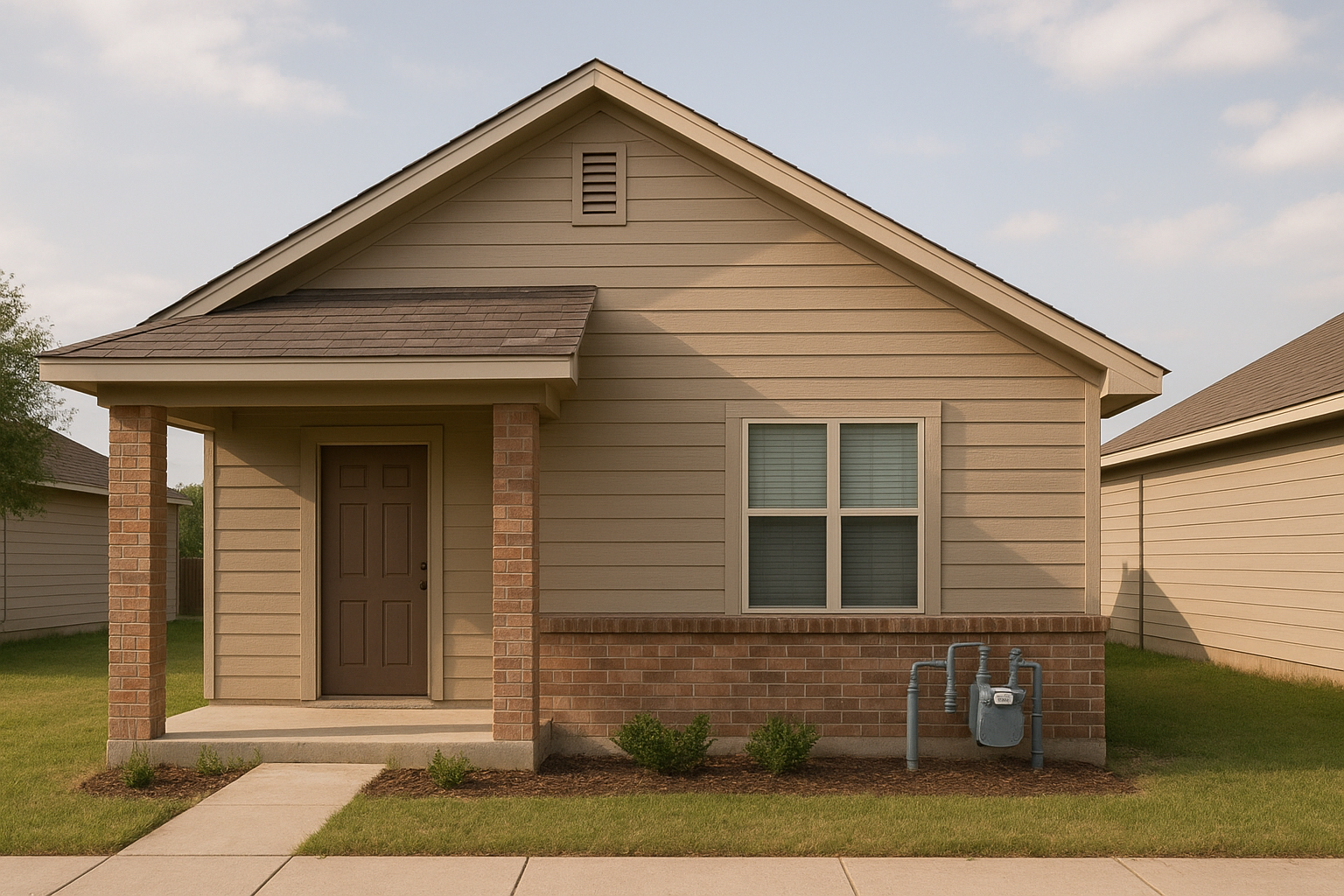
A properly installed gas meter connection is the starting point for reliable service to the home.
Gas Line Repair vs. Replacement: Which Does Your Property Need?
Not every problem requires a full replacement. For a small, isolated leak at a single fitting, a targeted repair is usually enough. However, once corrosion has spread through a long run of older galvanized pipe, patching one section only delays the next failure, and full replacement becomes the more cost-effective long-term choice.
A licensed plumber can usually tell the difference with a visual inspection and a pressure test, so it’s worth getting a professional opinion before paying for either option.
Why Choose Harris Plumbing TX for Natural Gas Line Installation Terrell TX Needs
Choosing a plumber for gas work is not a decision to take lightly, given the safety stakes involved. Harris Plumbing TX has operated as a family-owned business in Terrell since 1990, and that longevity reflects a consistent commitment to honest assessments and fair pricing. Specifically, the company holds active plumbing contractor licenses and certification for both natural gas and LP gas installation.
Additionally, free estimates over the phone make it easy to get a sense of project scope before committing to scheduled service. To learn more about the full scope of available work, visit the plumbing services page or explore the company’s website for additional resources. For direct scheduling, calling (972) 524-8492 connects homeowners and business owners with a team that has over 46 years of combined plumbing experience.
Frequently Asked Questions About Natural Gas Line Installation Terrell TX
What is natural gas line installation Terrell TX?
Natural gas line installation Terrell TX refers to running new or extended gas piping from a meter or supply source to appliances such as water heaters, stoves, or furnaces. A licensed plumber sizes, connects, tests, and has the work inspected before it goes into service.
Is Harris Plumbing TX licensed for gas line work?
Yes, Harris Plumbing TX holds active plumbing contractor licenses and is certified for both natural gas and LP gas work. The family-owned team has served Terrell and Kaufman County since 1990.
Do you offer free estimates for gas line installation?
Yes, Harris Plumbing TX offers free estimates over the phone for gas line projects. Call (972) 524-8492 to describe your project and get a general idea of scope before scheduling.
What areas does Harris Plumbing TX serve?
Harris Plumbing TX serves Terrell, Kaufman County, and surrounding counties in Texas. The company handles both residential and commercial gas piping projects throughout this service area. For a deeper walkthrough, see our Kitchen Plumbing Repair Terrell: Fix Leaks & Clogs Fast.
How long does natural gas line installation take?
Most residential installations take one to two days, depending on trenching distance, permit timing, and inspection scheduling. Larger commercial projects may take longer to complete.
How much does natural gas line installation cost?
Cost varies based on pipe length, material, trenching needs, and the number of appliances served. A free phone estimate from Harris Plumbing TX can provide a project-specific range.
How much does natural gas line installation cost per linear foot?
Per-foot pricing depends heavily on whether the run is indoors or buried, since trenching adds labor beyond the pipe and fittings themselves. A phone estimate is the most reliable way to get a number specific to your property.
What is the difference between natural gas and LP gas line installation?
Natural gas is delivered through a utility pipeline at low pressure, while LP gas, also called propane, is stored on-site in a tank at higher pressure. Both require certified installation, but pipe sizing and regulator setup differ between the two fuel types.
What’s the difference between gas line repair and full replacement?
Repair fixes an isolated leak or damaged fitting, while replacement addresses widespread corrosion across an older line. A licensed plumber determines which applies after a visual inspection and pressure test.
Does homeowners insurance cover gas line damage or replacement?
Coverage varies by policy and cause of damage, so it’s worth checking directly with your insurer. Keeping permits and inspection records on file from a licensed installation can also help support a future claim.
Can chemical drain cleaners damage my pipes?
Yes, repeated use of chemical drain cleaners can corrode older metal pipes and weaken PVC joints over time. Professional drain clearing is generally a safer option for long-term pipe health.
Do you provide emergency plumbing service for gas leaks?
If you smell gas, leave the property immediately and call your gas utility before contacting a plumber. Harris Plumbing TX can then inspect, repair, or reroute the affected line once it is safe to do so.
How do I know if I have a slab leak versus a gas line issue?
A slab leak usually involves pooling water, warm spots on flooring, or a spike in water bills, while a gas issue often produces a sulfur-like odor near appliances or the meter. Either situation warrants a professional diagnostic visit.
Do you handle plumbing remodel work that includes gas lines?
Yes, Harris Plumbing TX handles remodel plumbing that includes relocating or extending gas lines for new kitchen ranges, outdoor grills, or fireplace additions. Permits and inspections are coordinated as part of the remodel scope.
Do new construction homes in Terrell need a different gas line process?
New construction allows a plumber to plan gas routing before walls and flooring are finished, which usually simplifies the job compared to retrofitting an existing home. Permits and inspections still apply in the same way.
Can commercial gas line work be scheduled to minimize disruption?
Yes, commercial gas piping projects can often be scheduled around business hours or completed in phases to limit downtime. Discussing operational needs upfront helps the team plan installation timing accordingly.
What pipe materials are used for natural gas line installation?
Common materials include black iron pipe, corrugated stainless steel tubing, and in some cases polyethylene pipe for buried outdoor runs. Material choice depends on local code, location, and whether the line is indoor or underground.
Is a permit required for natural gas line installation in Terrell TX?
In most cases, yes, a permit and inspection are required before a new or altered gas line can be placed into service. A licensed plumbing contractor typically handles the permit application on the customer’s behalf.
How often should gas lines be inspected?
Gas lines should be inspected any time you notice an odor, before connecting a new appliance, or during a home purchase. Older properties without a recent inspection history benefit from a periodic professional check.
Final Thoughts on Natural Gas Line Installation in Terrell TX
In summary, natural gas line installation Terrell TX is a job that rewards careful planning, correct pipe sizing, and strict code compliance at every stage. From site evaluation through pressure testing and final inspection, each step protects the safety of a home or business. Harris Plumbing TX brings over 46 years of combined experience, active licensing, and natural gas and LP gas certification to every project throughout Terrell, Kaufman County, and surrounding areas. Ultimately, whether the job involves a new appliance connection, a full line extension, or a commercial upgrade, calling (972) 524-8492 for a free phone estimate is the simplest way to get started with a trusted, family-owned team.